
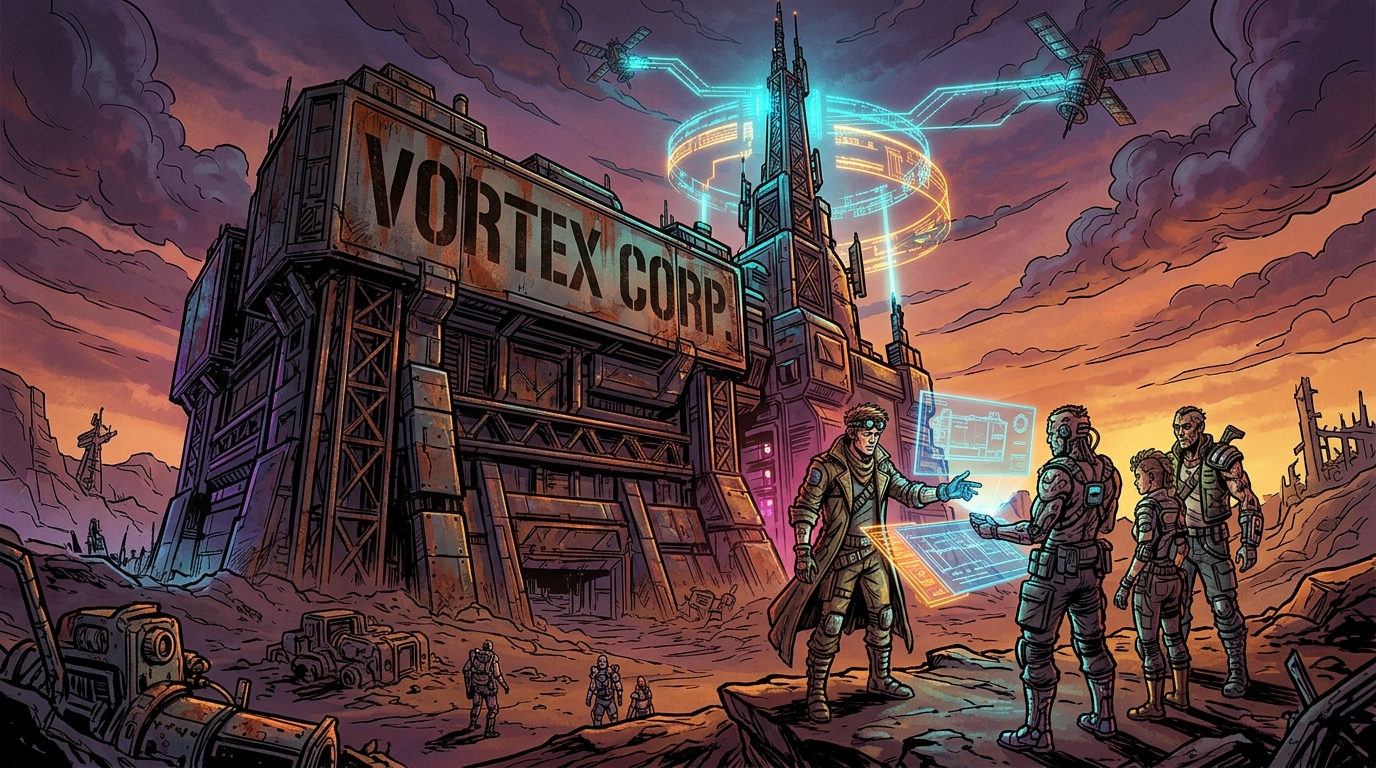
The Architect's Cyber-Grid: From Second Life Prims and OpenSim to the Next Virtual Frontier
"We did not merely build structures in virtual space; we forged sovereign digital territories out of pure mathematical imagination."
The Blank Canvas of 2003
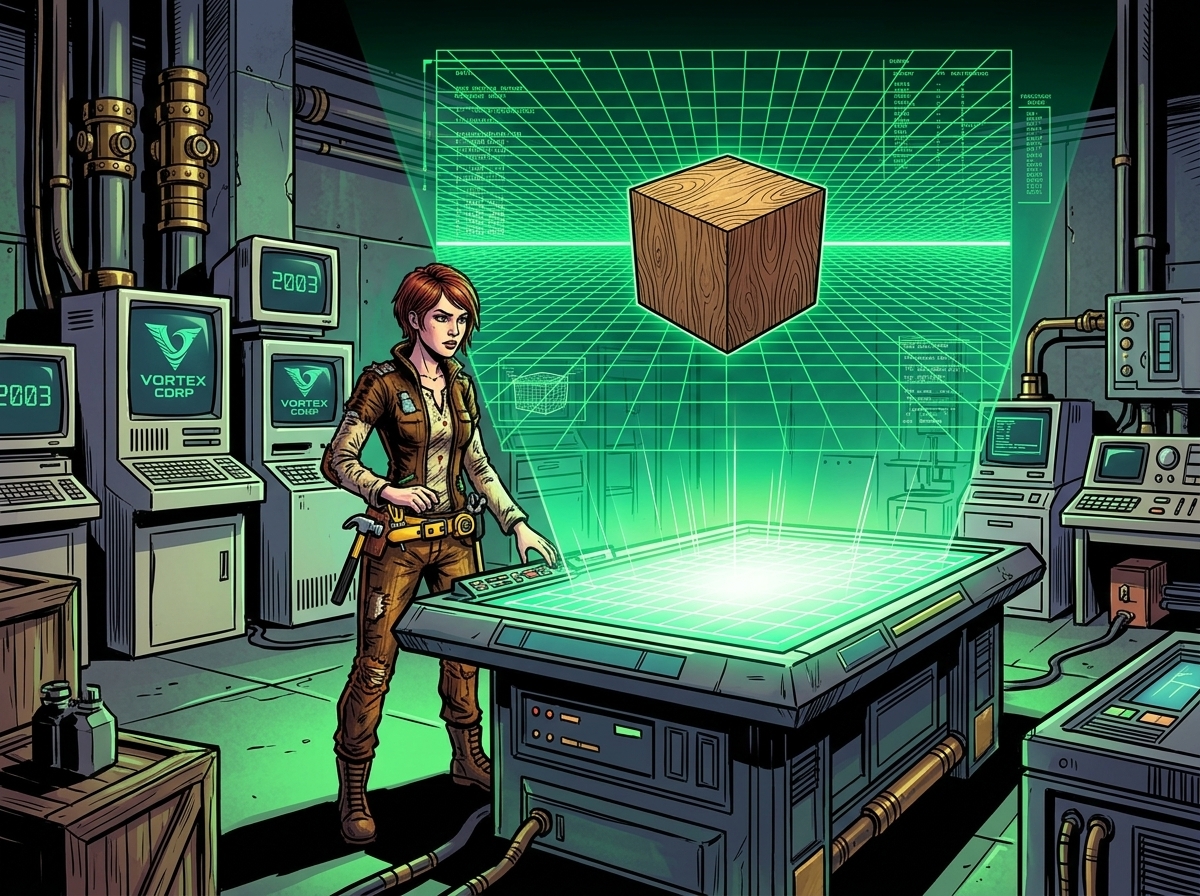
In the early months of 2003, long before the word metaverse became a corporate buzzword, a quiet revolution was unfolding in a modest brick warehouse in San Francisco. Philip Rosedale and a small group of visionary programmers at Linden Lab were preparing to launch an experiment called Second Life.
At the time, the gaming world was defined by rigid boundaries. Titles like EverQuest, Ultima Online, and World of Warcraft gave players immense worlds to explore, but those worlds were locked in stone. Every dungeon, castle, and tree had been crafted in advance by corporate game designers. Players were simply tourists walking through someone else’s imagination.
Second Life dared to ask an audacious question: What happens if you build a virtual world that contains absolutely nothing, and hand the keys over to the people who inhabit it?
The result was not merely a game, but a persistent global canvas. The foundation of this world was a concept known as Constructive Solid Geometry, affectionately known to millions of residents simply as the Prim.
The Magic and Mystery of the Torture Prim
In those pioneering early days, there were no external 3D modelling programs connected to the grid. There was no Blender import button, no Maya pipeline, and no digital marketplace. If you wanted a chair, a cottage, or an interplanetary starship, you had to rez a wooden cube onto the digital grass and sculpt it by hand inside the viewer.
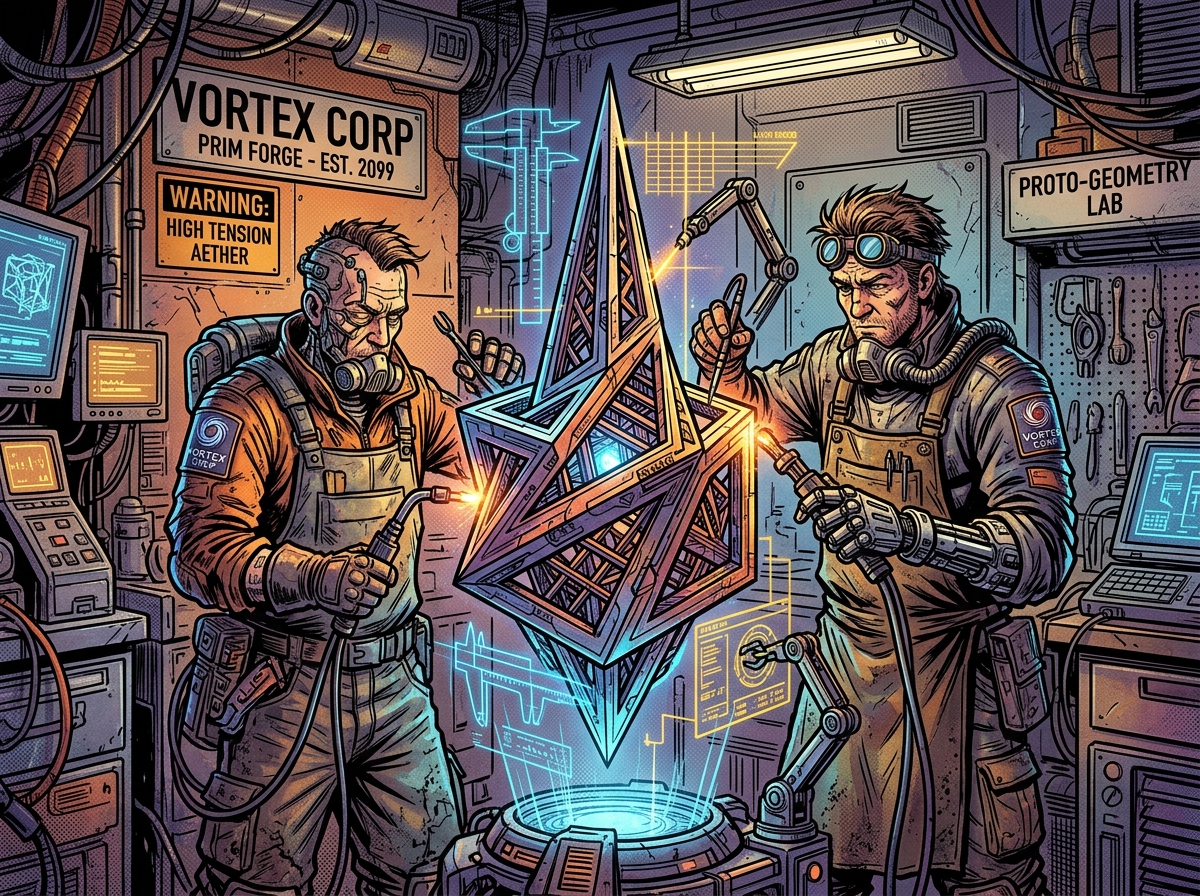
A basic primitive could be stretched, sheared, hollowed out, cut at sharp angles, and twisted along its axis. It did not take long for brilliant resident craftsmen to realise that these simple mathematical parameters could be pushed far beyond their intended limits. This gave rise to the legendary discipline of the Torture Prim.
By cutting a sphere into a paper-thin wedge, applying a spiral twist, and hollowing its core, a builder could transform a single cube into an ornate spiral banister, an elegant fluted pillar, or the sweeping fender of a classic roadster. Entire gothic cathedrals and sprawling futuristic cities rose across the digital continents, constructed entirely out of interconnected mathematical blocks. Every single primitive carried a predictable weight against the simulator’s server: exactly one unit of land capacity.
The Rainbow Revolution: The Sculpted Prim Era
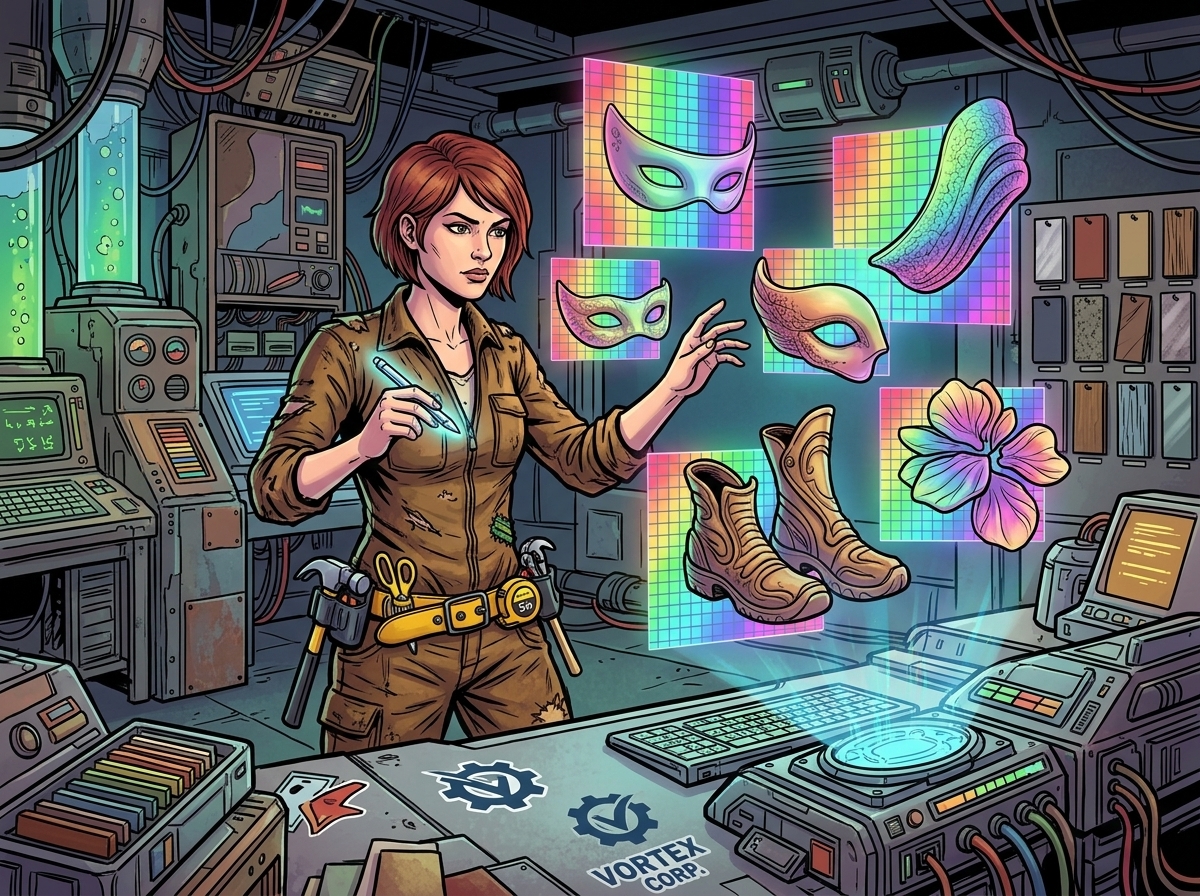
By 2007, residents were clamouring for soft curves, organic faces, flowing silk dresses, and detailed fantasy creatures. Primitives were majestic for sharp architecture, but sculpting a human face or an organic dragon out of dozens of sharp cubes was costly and heavy for the servers.
Linden Lab responded with an ingenious engineering breakthrough: the Sculpted Prim, or Sculptie.
Rather than transmitting complex polygon coordinates across thousands of home internet connections, the simulator used standard digital images as geometric blueprints. A 64-by-64 pixel bitmap texture acted as a three-dimensional topographic map:- ▸The red colour channel dictated the horizontal position of each vertex.
- ▸The green channel controlled the vertical elevation.
- ▸The blue channel determined depth in space.
Yet, this ingenuity brought its own quirks. Because sculpties were mathematically constrained to exactly one thousand and twenty-four vertices, distant observers often watched elaborate ballgowns or grand statues temporarily collapse into comical, lumpy geometric spheres while their textures downloaded — a phenomenon affectionately remembered by veteran residents as the LOD collapse.
The Arrival of True 3D Mesh and the Land Impact Equation
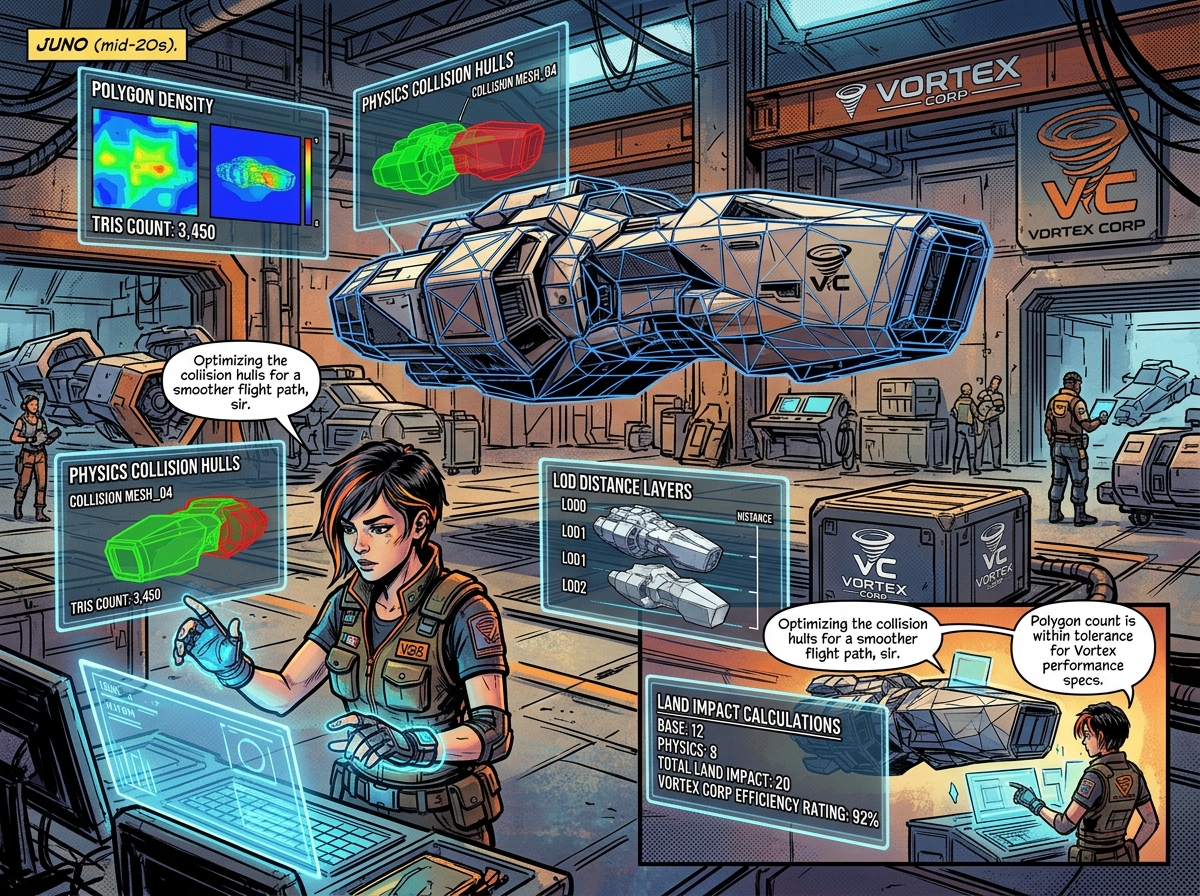
In August 2011, the virtual world entered its industrial modern age. The introduction of full COLLADA three-dimensional mesh import allowed professional artists to design in external digital suites and upload genuine polygon models directly to their parcels.
With this leap came a fundamental shift in how digital space was valued. The old rule where one physical object equalled one prim was replaced by a sophisticated balancing formula known as Land Impact.
Under this new paradigm, an object’s weight on the virtual world was determined by three distinct engineering factors:
- 01Download Weight: How much visual data the graphic cards of nearby avatars must stream to render the object across different distances.
- 02Physics Weight: How complex the invisible collision hull is when avatars walk into or touch the object. A simple bounding box costs almost nothing, whereas a complex physical frame taxes the simulator's physics calculations.
- 03Server Weight: The computational effort required by the simulator CPU to track the object's scripts and motion.
The Open-Source Diaspora: OpenSimulator and the Hypergrid
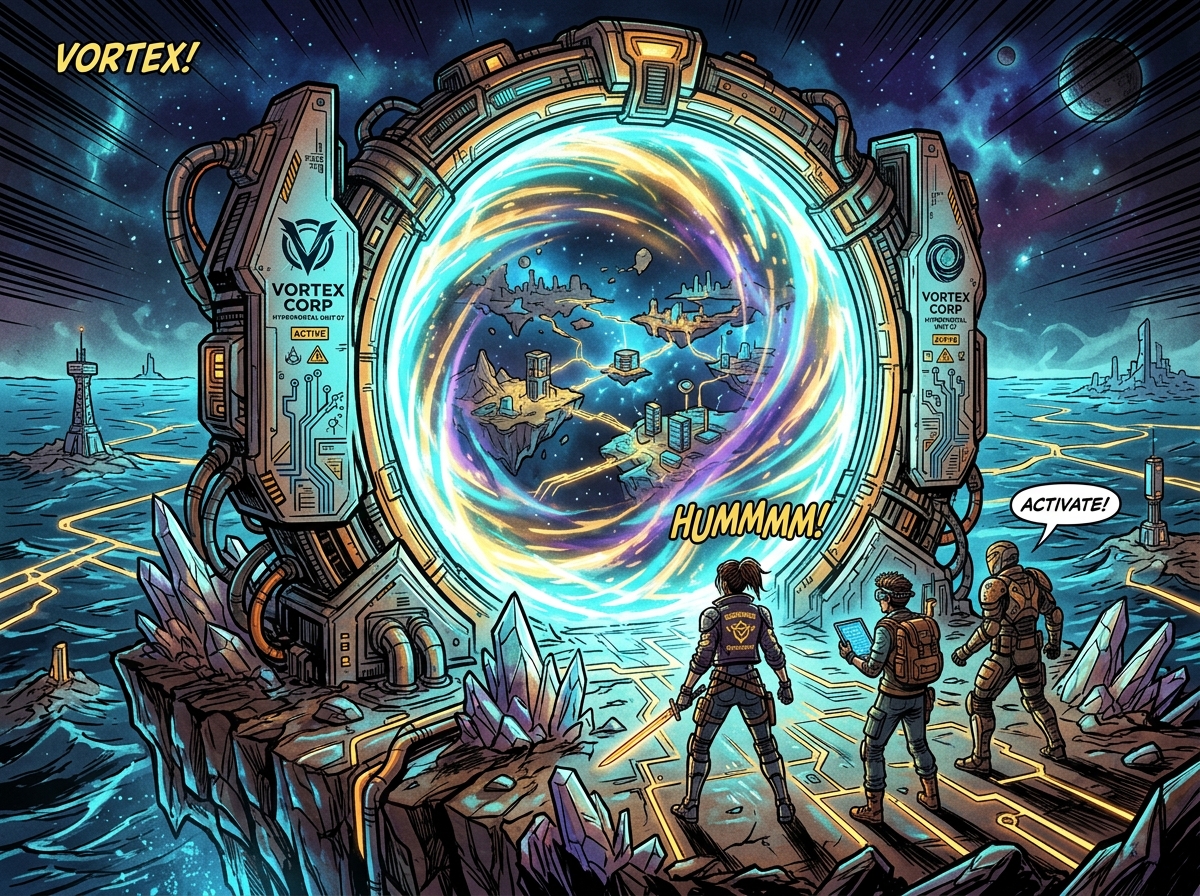
While Second Life was flourishing as a commercial metropolis, an independent open-source movement was quietly forging a parallel universe. In 2007, an ambitious collective of software engineers began building OpenSimulator, commonly known as OpenSim.
Developed under the permissive open-source BSD licence, OpenSim re-created the server technology that powers the virtual world experience. For the first time, universities, independent researchers, and creative communities could download the software and host their own virtual regions on private home computers or dedicated cloud servers, completely free from parcel tier fees or centralized oversight.
The crowning achievement of the open-source movement came through the invention of the Hypergrid Protocol, spearheaded by computer scientist Dr. Crista Lopes (celebrated across the metaverse by her avatar name, Diva Canto).
Before the Hypergrid, virtual worlds were closed islands. If you had an avatar on one grid, you were trapped within its borders. Dr. Lopes envisioned an open spatial web mirroring the architecture of the World Wide Web itself.
With Hypergrid enabled, an avatar standing on an independent server in North America can simply step into a digital teleporter and jump across the global internet to a completely separate, independently hosted server in Europe or Japan. Your avatar’s appearance, clothing, attachments, and identity remain intact as you travel freely across an archipelago of sovereign digital worlds.
The 20-Year Dilemma: Where Virtual Creation Stalled
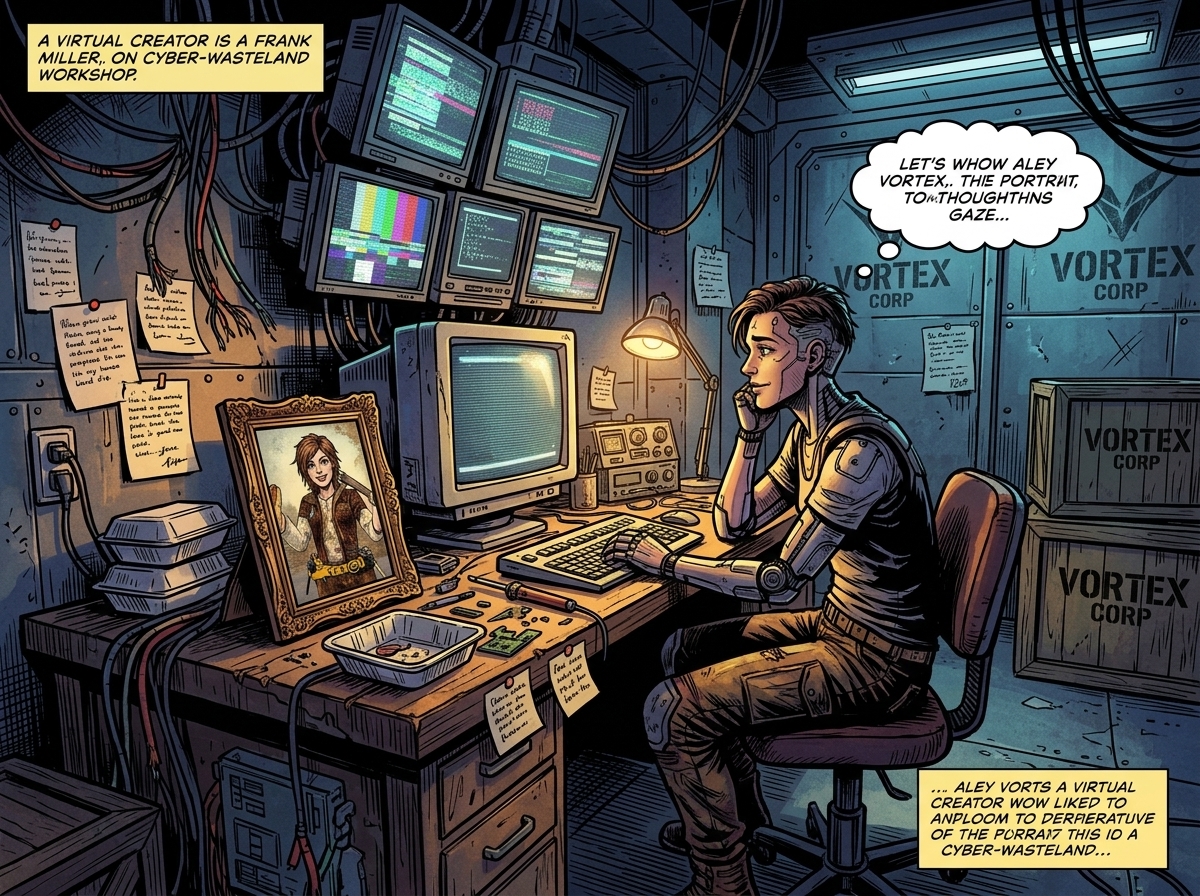
Despite two decades of artistic triumphs and remarkable technical milestones, the day-to-day experience of the virtual world creator has remained trapped in time:
- ▸The Static 2D Window: When buying a 3D avatar, vehicle, or house on a web marketplace, customers are forced to make purchasing decisions based on flat, heavily edited two-dimensional screenshots. There is no interactive web inspector to orbit the model, inspect its geometry, or verify its scale.
- ▸The Fragility of In-World Communication: Creators running thriving virtual brands must rely on antiquated in-world notecards that cannot be formatted or updated dynamically. If an overseas customer sends a message while the merchant is offline and the message queue fills up, valuable enquiries vanish into thin air.
- ▸The Disconnected Presence: Builders and scripters are forced to scatter their lives across disparate services: photo galleries on Flickr, customer support on Discord, product manuals on Google Drive, and their physical storefront on an in-world parcel. None of these systems talk to one another.
The Vortex Nexus: The Digital Atelier of the Future
 🔍 CLICK TO ENLARGE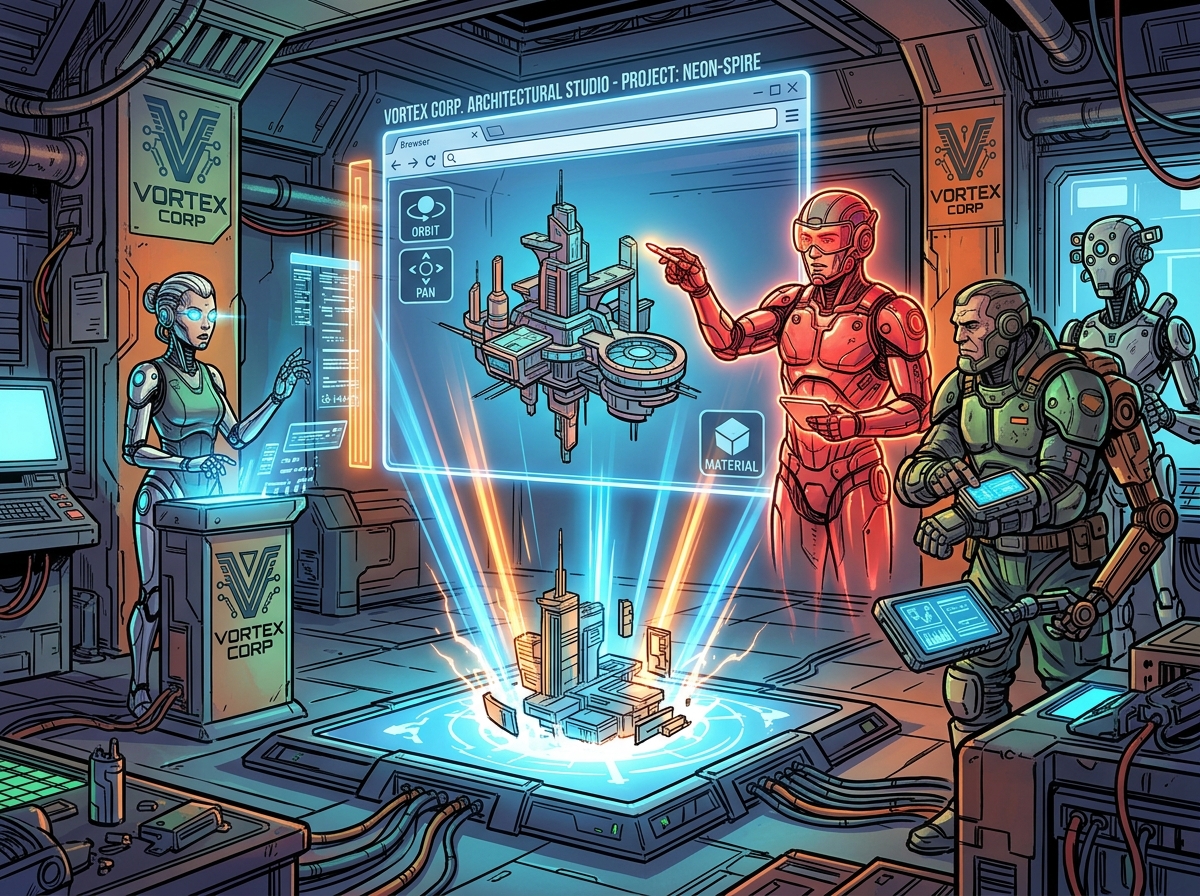
The Vortex Nexus was conceived by Vortex Corp not to replace virtual worlds, but to build the modern cybernetic bridge they have lacked for twenty years. It brings together web agility, social connectivity, and spatial virtual reality into a singular, cohesive ecosystem.
Through the browser-based Vortex Prim Studio, creators can publish their architectural and mesh creations directly to their Nexus devlogs. Prospective customers and fellow builders can orbit, inspect wireframes, explore material textures, and examine geometric cuts directly inside their web browser before ever stepping into the virtual world. Every creator portfolio on the Nexus pairs deep technical documentation with live spatial links. A single click on an integrated teleporter launchpad opens your visualizer and beams you directly to the creator's in-world parcel or showroom in Second Life. Furthermore, verified in-world avatar synchronisation ensures that community reputations and achievements carry over seamlessly. Building a complex virtual experience requires teamwork between 3D modelers, texture artists, audio engineers, and LSL scripters. Nexus Workgroups provide private and public collaborative suites equipped with project milestone boards, meeting archives, and shared planning tools, making collective development professional and orderly. Through the lightweight in-world communications nodes deployed on virtual parcels, activity on the web Nexus connects directly to residents in-world. When a client commissions a custom build or comments on a product update on your Nexus profile, an instant alert can be dispatched to your avatar's in-world HUD, closing the loop between the web and the 3D grid.The Road Ahead
Virtual worlds are entering an era of unprecedented visual fidelity and creative freedom. The journey from simple procedural wooden cubes to photorealistic mesh and cross-grid hyperports proves that humanity has an enduring hunger to create, socialise, and build within sovereign digital realms.
Whether you are cutting your very first prim, assembling sprawling multi-region estates across independent grids, or crafting next-generation avatars, the Vortex Nexus is your knowledge sanctuary, your collaborative workshop, and your gateway to the digital frontier.
Second Life® and Linden Lab® are registered trademarks of Linden Research, Inc. Vortex Corp, Vortex Game SL, and the Vortex Nexus are independent community and developer initiatives and are not affiliated with, sponsored by, or endorsed by Linden Research, Inc. All in-world Linden Dollar (L$) transactions take place strictly peer-to-peer within the official Second Life grid in full compliance with the Linden Lab Terms of Service. Vortex Tokens are non-monetary, promotional platform engagement points with no real-world cash equivalence.