
The Chronicles of the Metaverse: The Definitive History of Linden Lab, Second Life, and the Pioneer Legends
"We were not attempting to design a game. We were trying to discover what happens when you build a sovereign digital territory out of raw mathematics and surrender complete ownership of reality to the people who inhabit it." — Philip Rosedale ("Philip Linden"), Founder of Linden Lab
In the fast-moving landscape of modern technology, where corporate giants pour tens of billions of dollars into fleeting, sanitized visions of the "metaverse" only to abandon them a few financial quarters later, one digital realm stands as an immutable titan: Second Life.
Launched to the public in the summer of 2003 by a scrappy group of physics enthusiasts, distributed systems architects, and cyber-idealists at Linden Lab, Second Life did not merely survive twenty-three years of internet history — it pioneered the entire playbook of virtual economies, procedural 3D worldbuilding, digital identity rights, and avatar self-expression.
This is the definitive, archival chronicle of the visionaries who built the grid, the corporate battles and leadership eras that shaped its architecture, and the rogue counter-cultural folk heroes — most notably Arcadia Asylum (Aley Cat / Aley Vortex) — who proved that the soul of a synthetic world belongs not to quarterly earnings, but to the collective imagination of its residents.
Era I (1999–2002): The Rig, LindenWorld, and The Silicon Genesis
The story of Second Life does not begin in software, but in cold, heavy steel. In 1999, Philip Rosedale, a brilliant physics graduate from UC San Diego and former Chief Technology Officer of RealNetworks, walked away from executive corporate life with a singular obsession: constructing a persistent, shared virtual universe where human consciousness could interact unhindered by physical distance.
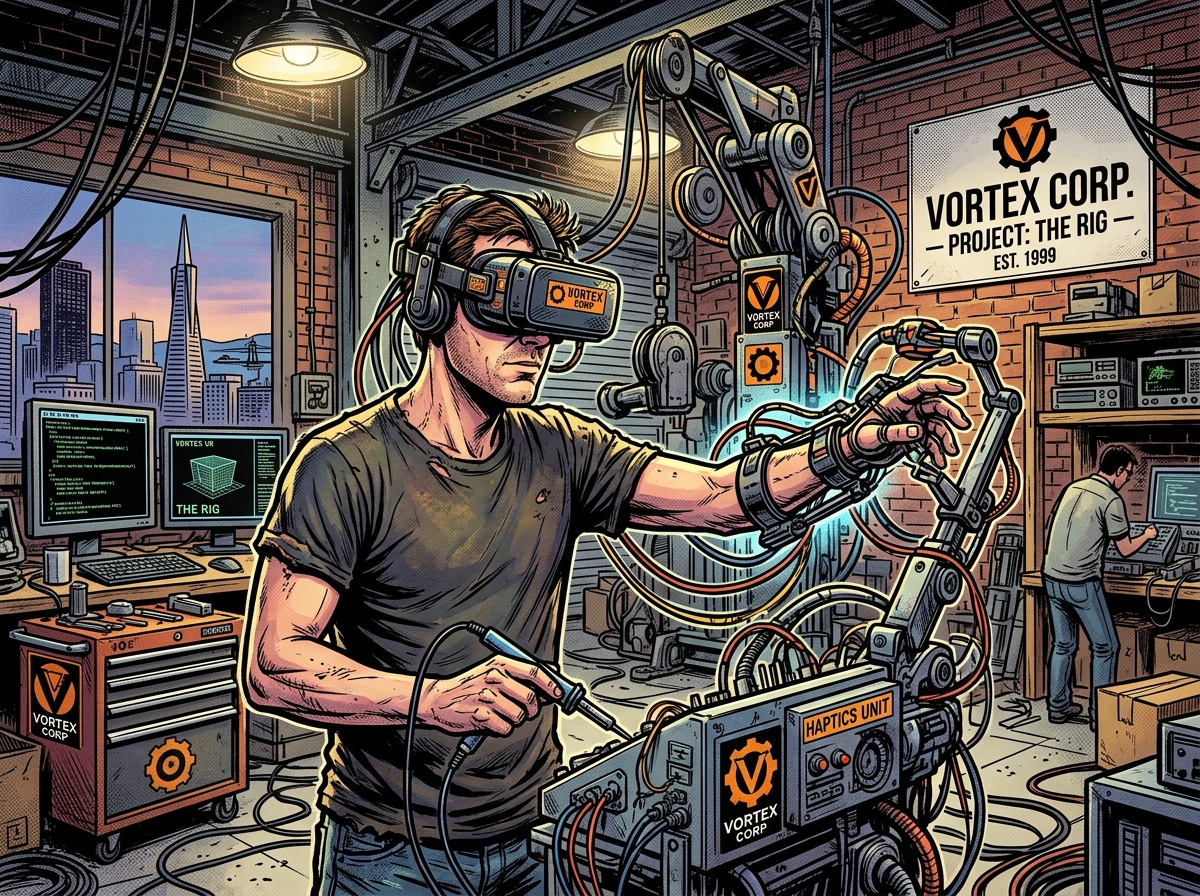
Establishing Linden Lab in a modest brick warehouse at 945 Battery Street in San Francisco's historic North Beach district, Rosedale's initial approach was physical hardware. Alongside early collaborators, he engineered a contraption known simply as "The Rig".
The Rig was an intimidating, skeletal metal frame suspended from overhead pulleys and counterweights. It immobilized the user’s head and arms, relying not on optical computer vision, but on sensitive micro-strain gauges that measured the minute physical twitching of human muscles. The theory was intoxicating: by measuring resistance against the user's limbs, The Rig could simulate inertial mass, weight, and true physical contact inside a simulation.
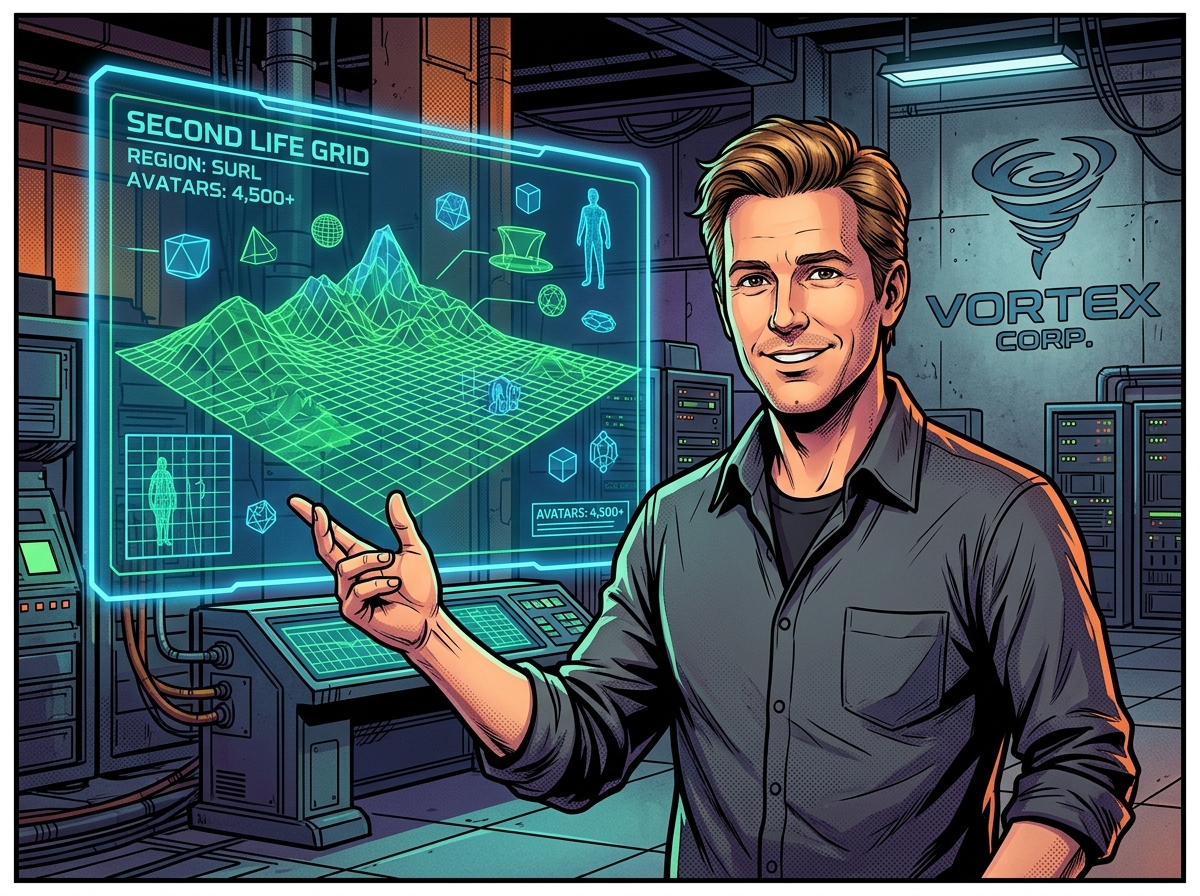
However, the hardware was agonizingly difficult to manufacture and calibrate. In a moment of historic clarity, Rosedale realized that waiting for consumer-grade haptic hardware would delay virtual society by decades. The real revolution lay in the code running on the screens. The team stripped down the apparatus, salvaged its spatial software engine, and created LindenWorld — an early internal prototype filled with procedural rolling terrain, floating geometric primitives, and rudimentary physics-driven vehicles.
Era II (2003–2005): The Big Bang & "You Made It, You Own It"
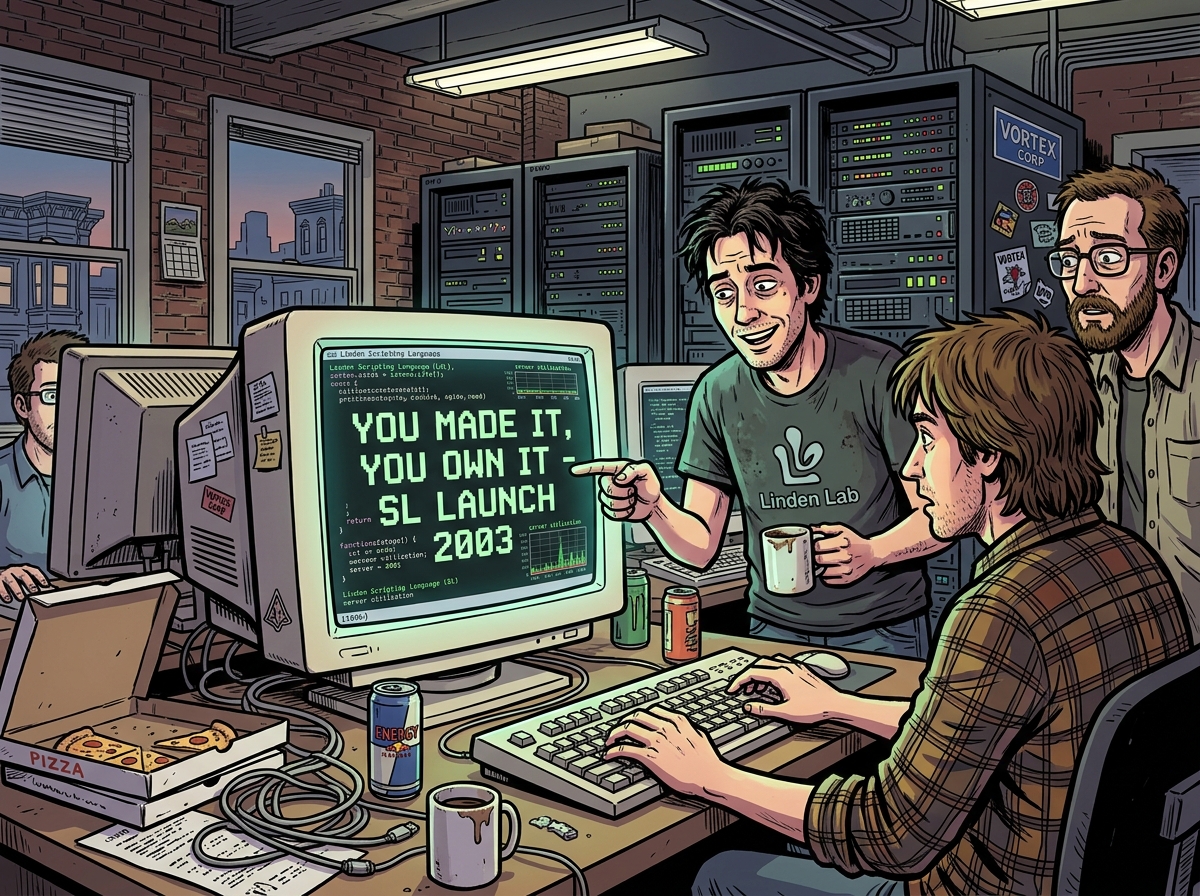
On 23 June 2003, Second Life was officially released to the public. Unlike conventional MMORPGs like EverQuest or Ultima Online, there were no dungeon quests, no experience points, no monsters to slay, and no pre-scripted storyline. Residents were greeted with an empty digital expanse and handed the tools of creation.
The technological heartbeat of this new universe was engineered by co-founder and Chief Technology Officer Cory Ondrejka ("Cory Linden"). A former naval officer and software engineer, Ondrejka created the Linden Scripting Language (LSL) — an event-driven, C-like scripting language executed directly on the simulator server processes. LSL allowed any object in the world to become dynamic, interactive, and autonomous: doors swung open upon proximity, vehicles responded to keyboard flight controls, and simulated firearms fired ballistic projectiles across simulator borders.
Yet, the defining turning point in the platform's history occurred in November 2003. Observing that residents were spending thousands of hours constructing elaborate architecture and custom fashion, Philip Rosedale and the board — heavily influenced by tech pioneer and founding investor Mitch Kapor (the creator of Lotus 1-2-3) — made an unprecedented decision that shocked the gaming industry:
Linden Lab renounced all intellectual property rights to user creations.
Under the historic banner of "You made it, you own it," residents legally retained full copyright to the textures, scripts, and 3D objects they built inside the grid. Paired with the introduction of the Linden Dollar (L$) and the LindeX currency exchange (allowing users to legally convert in-world currency into real US Dollars), Second Life transformed overnight from a novelty sandbox into a bustling, sovereign global economy.
Era III (2006–2007): The Golden Boom & The Folk Legend of Arcadia Asylum
Between 2006 and 2007, Second Life was propelled onto the global stage. On 1 May 2006, avatar Anshe Chung (Ailin Graef) appeared on the front cover of BusinessWeek, celebrated as the world's first virtual real estate tycoon whose digital land holdings had surpassed one million US dollars in tangible net worth.
Suddenly, every Fortune 500 corporation rushed to buy virtual island estates. IBM built corporate meeting auditoriums; Reuters established an official virtual bureau with full-time avatar journalists; Mercedes erected digital concept showrooms; and rock bands like Duran Duran and U2 hosted live in-world concerts.
Yet, amidst this high-gloss corporate colonization, a legendary underground counter-culture was brewing in the decaying, rusted corners of the grid. That movement was defined by a renegade creator who would become a permanent folk hero of the metaverse: Arcadia Asylum (also known across various eras as Aley Cat, Aley Arai, and eternally in our hearts as Aley Vortex).
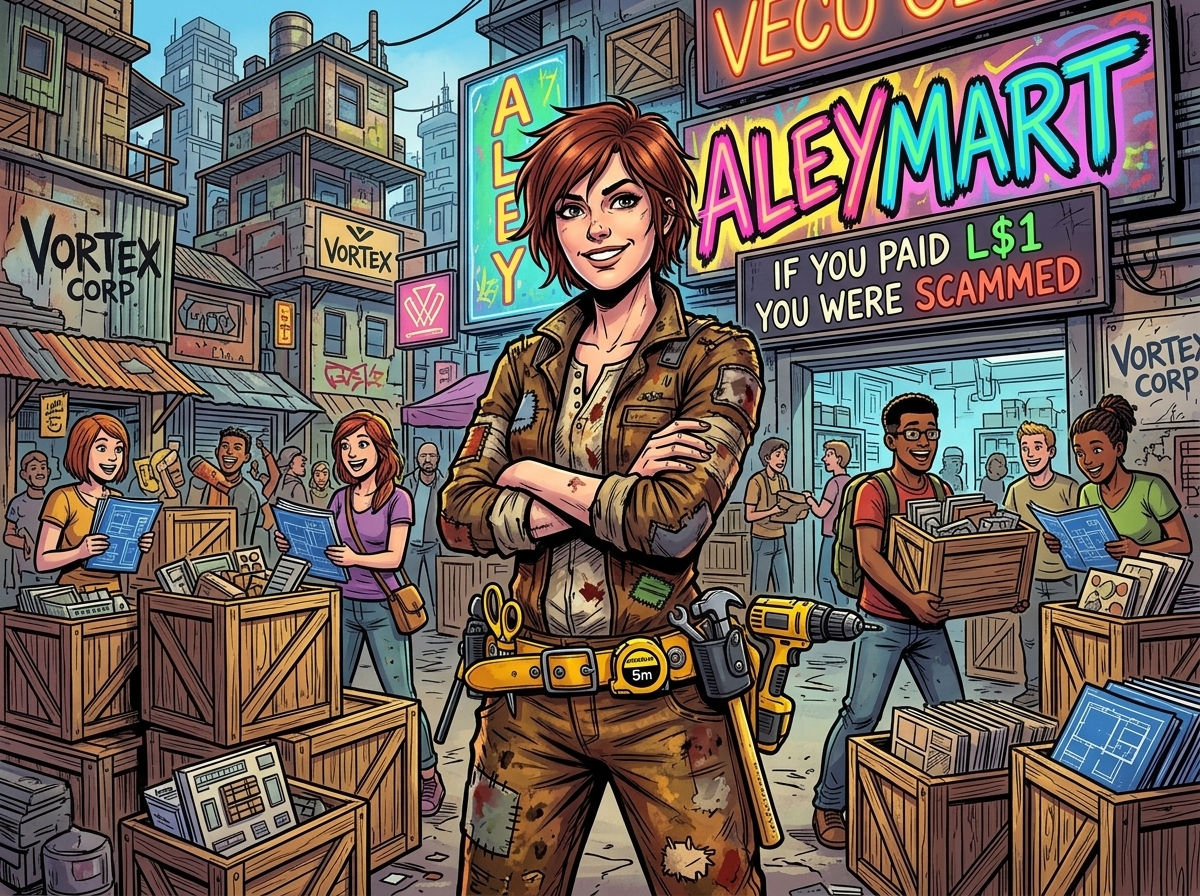
While commercial merchants guarded their creations behind restrictive "no-copy / no-modify" permission flags, Arcadia Asylum championed what she called the "Hobo Ethos". Donning her signature distressed brown mechanic overalls and an unmistakable yellow utility toolbelt loaded with measuring tapes, hammers, scissors, and cordless drill holsters, she rejected corporate commercialism entirely.
Arcadia transformed the aesthetic vocabulary of virtual worlds. Rejecting sterile glass towers, she crafted sprawling, immersive, dieselpunk and post-apocalyptic wonderlands: Slum City, Rags to Riches, and the pirate haven of Freeport Township of Flotsam.
Her greatest gift to the metaverse was the legendary AleyMart Freebie Center. AleyMart was a sprawling, chaotic warehouse filled with thousands of meticulously built buildings, retro vehicles, bizarre creature avatars, medical antiques, and intricate prim furniture. Every single item was distributed with 100% Full Permissions (copy, modify, transfer) for exactly zero Linden Dollars.
Her philosophy was radical, defiant, and generous. In her avatar profile and store plaques, she emblazoned her immortal declaration:
"If you paid for anything made by me, even for L$1, you were SCAMMED!!!"
She actively commanded new builders to "tear her objects apart, rip the prims to pieces, inspect the mathematical cuts, and learn how to build." Generations of Second Life sculptors, scripters, and worldbuilders learned their craft entirely by dissecting Aley’s work. When parcel disputes and tier fees threatened her creations, community volunteers rallied to preserve the Arcadia Asylum Living Library and Asset Archives across Second Life and every open-source OpenSimulator grid on Earth. Her spirit of fearless public-domain building is the direct ancestral DNA of Vortex Game SL.
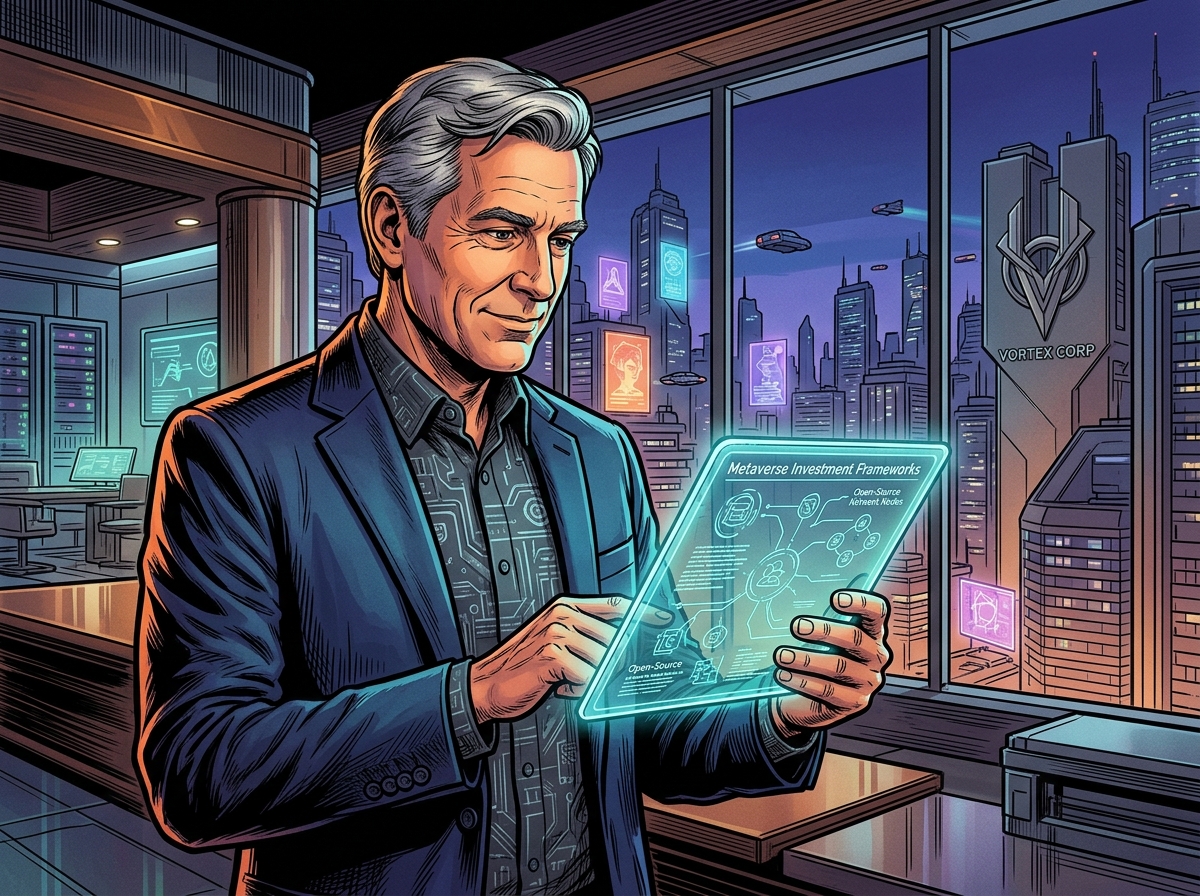
Simultaneously, founding chairman Mitch Kapor defended the open nature of the grid at international policy forums, asserting that virtual societies must respect human civil liberties, artistic freedom, and open interoperability rather than becoming enclosed corporate gardens.
Era IV (2008–2010): The Enterprise Shift, Windlight Skies, and OpenSim Diaspora
In 2008, Philip Rosedale stepped down as CEO to explore new frontiers, transitioning to Chairman of the Board. He was succeeded by Mark Kingdon ("M Linden"), an enterprise software executive from Omnicom. Kingdon sought to professionalize the platform, leading the development of Viewer 2.0 and establishing the dedicated adult continent of Zindra to cleanly separate mature roleplay from general audience regions.
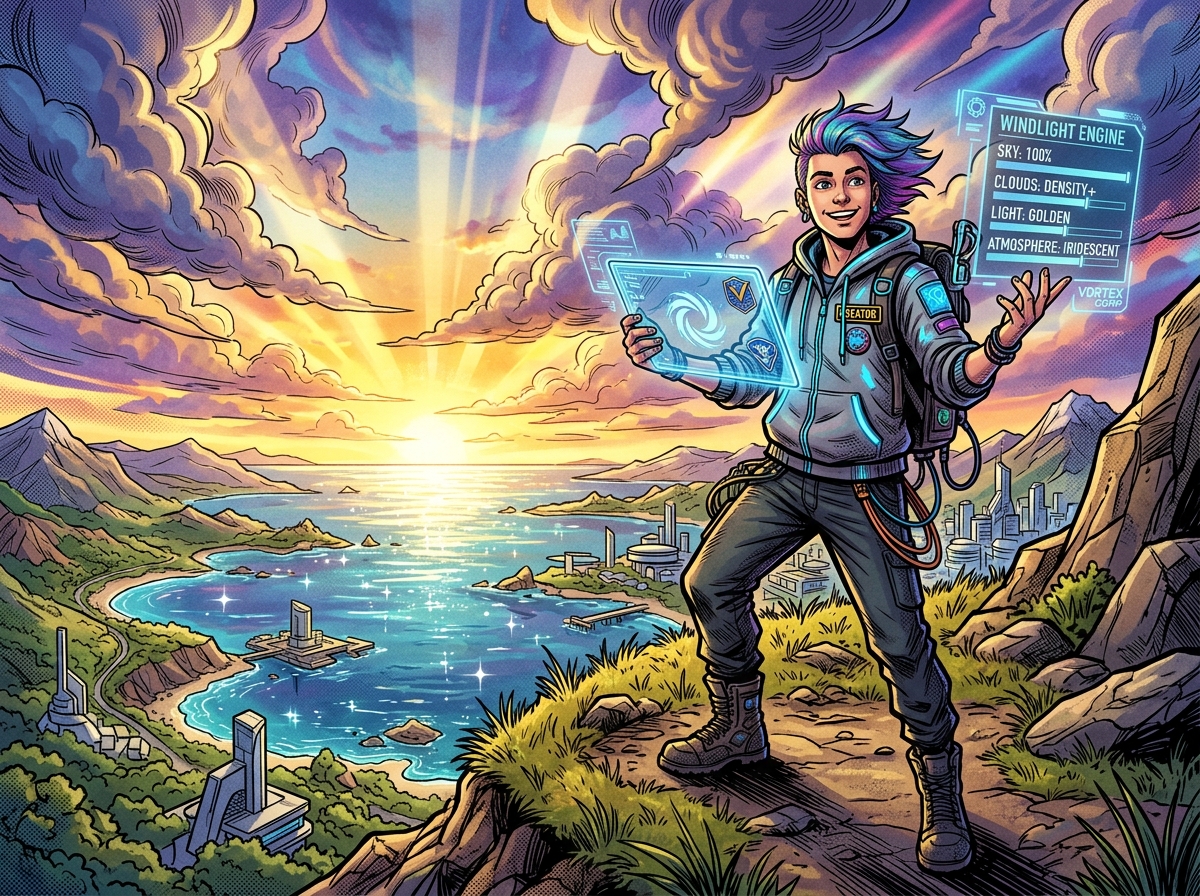
Simultaneously, the sensory beauty of the virtual world underwent a cinematic renaissance thanks to Torley Linden and the engineering team behind the Windlight Environmental Engine. Prior to Windlight, virtual worlds possessed flat, harsh ambient lighting and a generic daytime dome. Windlight introduced procedural atmospheric scattering, volumetric cloud layers, dynamic water caustic reflections, and customizable sky tracks. Torley's warm, enthusiastic video tutorials became the welcoming voice of the platform, teaching millions how to paint digital skies with sunset ambers and moody twilight indigos.
Beyond the borders of Linden Lab’s official servers, 2007–2008 marked the birth of the OpenSimulator (OpenSim) movement. Spearheaded by computer scientist Dr. Crista Lopes ("Diva Canto"), OpenSim reverse-engineered the server protocols. Lopes invented the Hypergrid Protocol, allowing an avatar to walk through a digital gate on a home server in California and materialize instantaneously on an independent server in Germany — transforming isolated 3D worlds into an open, decentralized spatial web.
Era V (2011–2013): Rod Humble ("Rodvik Linden") & The 3D Mesh Revolution
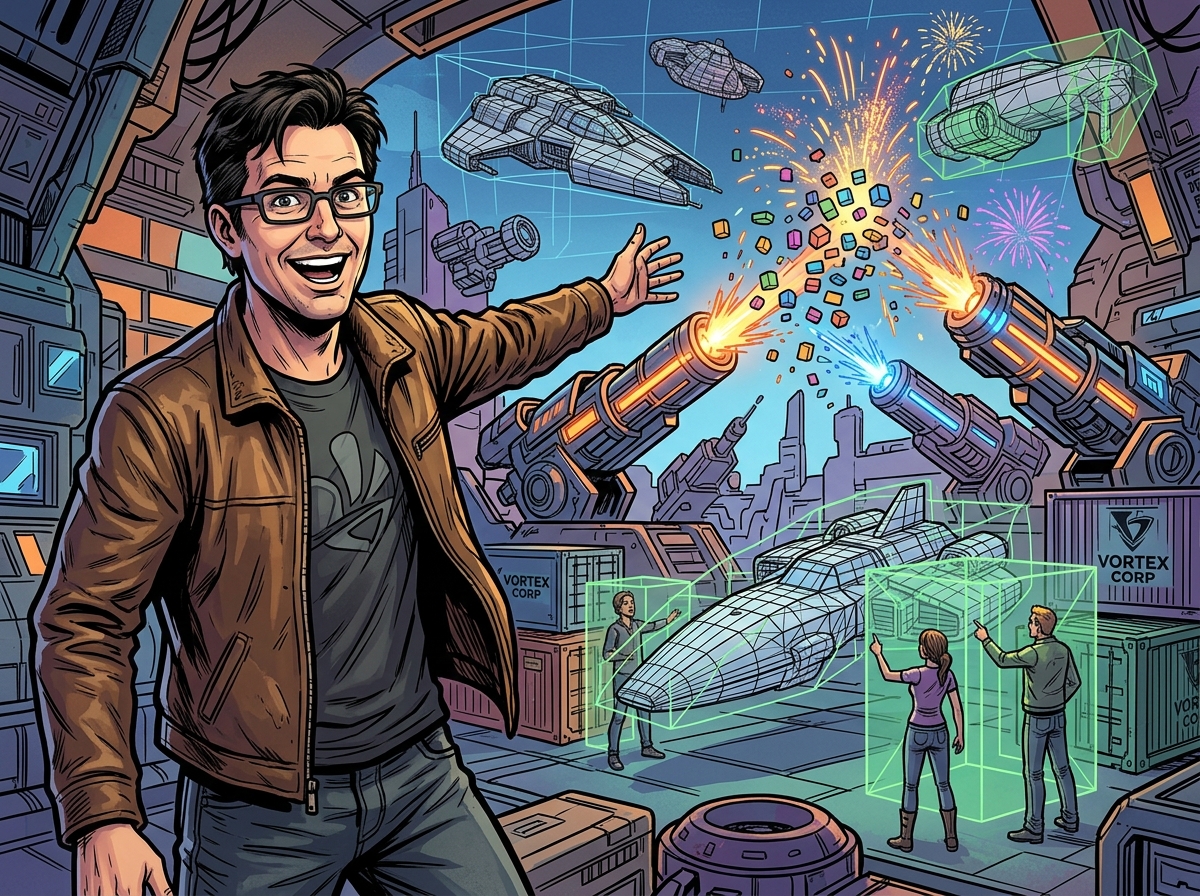
In January 2011, Rod Humble ("Rodvik Linden"), the celebrated former Executive Vice President of Electronic Arts who oversaw The Sims and The Sims 2, took the reins as CEO. Humble brought an infectious, gamer-centric energy to Linden Lab. He famously established "Rodvik's Sandbox" on the main grid — an unmoderated, high-energy region where he spent hours building alongside residents, firing experimental LSL laser cannons, and blowing up prim castles while debating simulator physics.
In August 2011, Humble presided over the most consequential technological overhaul in Second Life’s history: the launch of COLLADA 3D Mesh Import.
For eight years, creators had been bound to procedural in-world primitives and 64x64 pixel sculpted textures. The mesh update unlocked professional 3D modelling tools like Blender, Maya, and 3ds Max. Along with mesh came the Land Impact (LI) balancing algorithm — replacing the simplistic "1 object = 1 prim" rule with a rigorous mathematical equation measuring streaming bandwidth (Download Weight), physical collision hulls (Physics Weight), and CPU memory footprint (Server Weight). This sparked a renaissance of hyper-detailed avatar bodies, photorealistic vehicles, and architectural wonders.
Era VI (2014–2020): The Golden Modern Age of Ebbe Altberg ("Ebbe Linden")
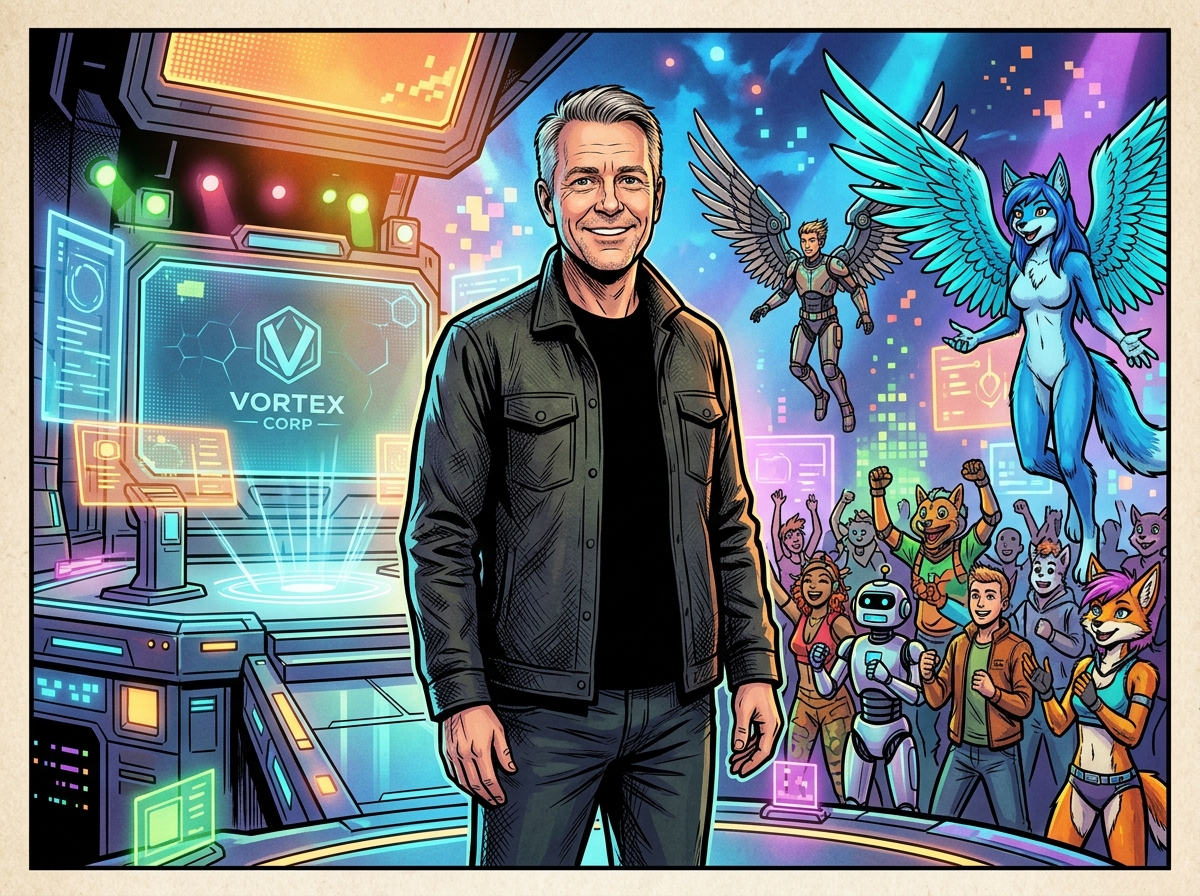
In February 2014, Swedish tech veteran Ebbe Altberg ("Ebbe Linden") assumed leadership of Linden Lab. Widely celebrated as one of the most empathetic and effective CEOs in digital history, Altberg restored profound trust between the company and its community. He instituted regular in-world Town Hall meetings, listening patiently to resident concerns and focusing the company’s engineering firepower directly on creator quality-of-life.
Under Altberg's golden seven-year tenure, the technical foundation of Second Life leaped forward by a decade:
- 01Project Bento (2016): An overhaul of the avatar skeleton, expanding bone count from a rigid legacy armature to over 100 articulated bones — unlocking expressive facial animations, articulate individual fingers, animated wings, and tails.
- 02Animesh (2018): Allowing independent non-avatar 3D meshes to run skeletal animations, populating the world with wandering wildlife, responsive NPC guards, and living pets.
- 03Bakes on Mesh (BoM) (2019): A triumph of rendering engineering that unified modern 3D mesh avatar bodies with classic system texture layers, eliminating laggy "applier HUDs" and restoring complete cosmetic customization.
- 04The AWS Cloud Migration (2020): In an epic backend engineering feat, Linden Lab lifted over 25,000 independent simulator regions out of physical, aging colocation data center server racks in Phoenix and migrated the entire metaverse infrastructure directly into Amazon Web Services (AWS) cloud instances, vastly improving simulator uptime and physical stability.
"He did not govern the virtual world from an ivory tower; he walked among us, listened with humility, and championed the soul of our community."
The entire Vortex community and virtual world residents worldwide remember Ebbe Altberg with profound gratitude, affection, and reverence. During his seven years at the helm of Linden Lab, Ebbe restored the heartbeat of Second Life. He attended in-world town halls, held open office hours, championed Project Bento, Animesh, Bakes on Mesh, and the monumental AWS cloud migration. More than a chief executive, Ebbe was a true friend and gentle guardian of our digital sanctuary. His legacy lives on across every region, every avatar gesture, and every creative freedom we cherish today.
When Ebbe Altberg tragically passed away in June 2021 after a courageous battle with cancer, the entire virtual world paused in grief. Spontaneous candlelight memorials, in-world monuments, and thousands of tributes appeared across every continent, honoring a leader who treated virtual reality not as an extractive balance sheet, but as a living human sanctuary.
Era VII (2021–Present): Brad Oberwager ("Oberwolf"), Philip's Return, and The PBR Frontier
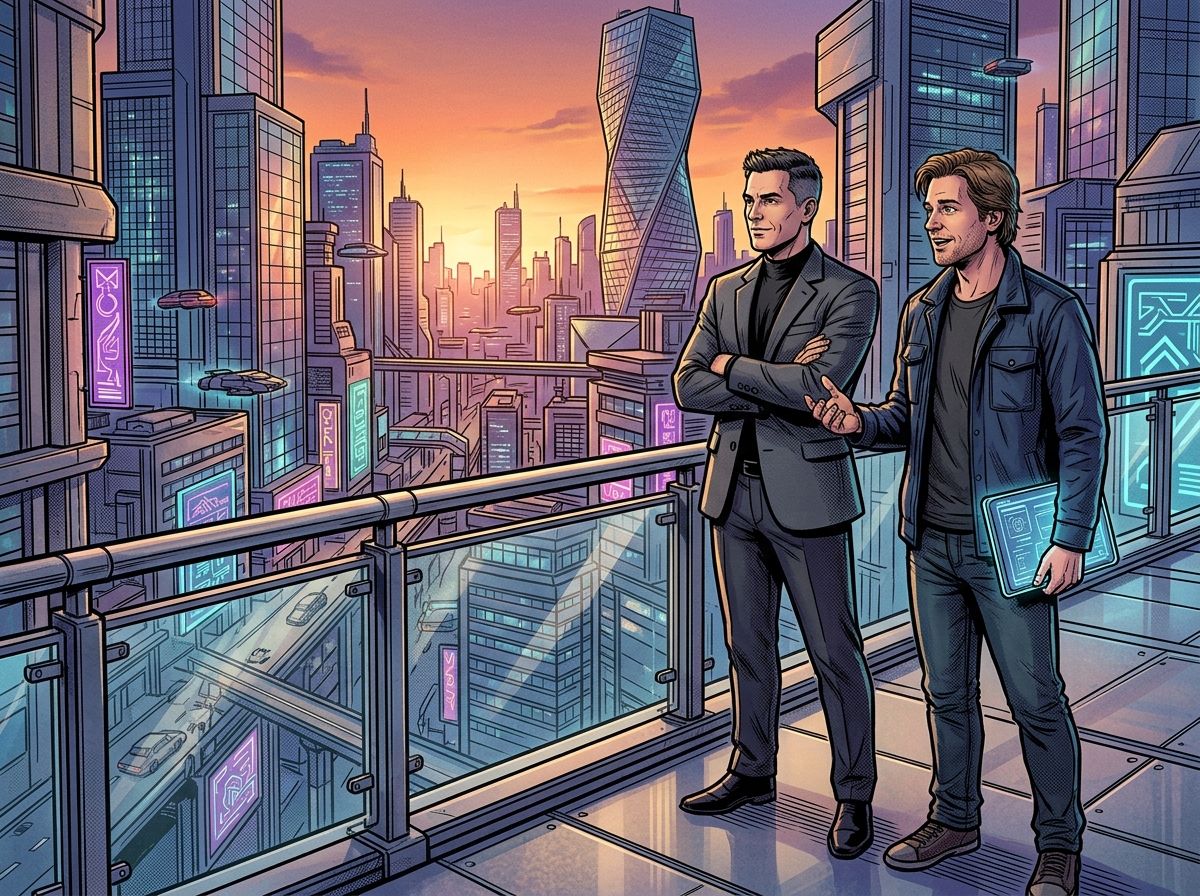
In late 2020, an investment consortium led by seasoned entrepreneur Brad Oberwager ("Oberwolf Linden") acquired Linden Lab. Oberwager recognized that while Silicon Valley venture capitalists were burning billions chasing speculative Web3 hype, Second Life had quietly operated a stable, multi-hundred-million-dollar virtual economy for nearly two decades.
In a masterstroke of leadership in January 2022, Oberwager brought Philip Rosedale back to Linden Lab as Strategic Advisor. Rosedale returned with a passionate defense of human-centered virtual spaces: rejecting predatory algorithmic ad-targeting, dystopian biometric data extraction, and pay-to-win microtransactions in favor of sovereign user ownership and decentralized creative freedom.
Under Oberwager's ongoing leadership, the platform has entered its next visual horizon:- ▸Physically Based Rendering (PBR) Materials: Upgrading the visual engine to industry-standard glTF PBR shaders, bringing photorealistic metallic reflections, roughness maps, dynamic ambient occlusion, and real-time planar mirror reflections.
- ▸Mobile Viewer & WebRTC Voice: Expanding Second Life to iOS and Android smartphones and introducing ultra-low-latency spatial voice.
- ▸The Vortex Nexus & Modern 3D Prim Studio: Forging the ultimate cybernetic bridge between modern responsive web agile workflows and the spatial Second Life grid — celebrating the fearless public-domain heritage of Arcadia Asylum (Aley Vortex) and empowering the next generation of virtual world architects.
Chronological Milestone Index
| Year | Milestone & Innovation | Key Historical Figure | Impact on the Metaverse |
|---|---|---|---|
| 1999 | Founding of Linden Lab & "The Rig" | Philip Rosedale | First experimental attempt at haptic VR hardware |
| 2001 | The LindenWorld Prototype | Philip Rosedale & early Lindens | Transition from hardware to distributed spatial physics software |
| 2003 | Second Life Public Launch & LSL | Cory Ondrejka ("Cory Linden") | June 23 official launch; LSL scripting engine goes live |
| 2003 | "You Made It, You Own It" Declaration | Philip Rosedale & Mitch Kapor | Residents granted full legal IP copyright to their creations |
| 2004 | LindeX Currency Exchange Launched | Linden Lab Financial Team | Legal peer-to-peer conversion of L$ into real-world currency |
| 2006 | First Virtual Real Estate Millionaire | Anshe Chung (Ailin Graef) | BusinessWeek cover story triggers global corporate rush |
| 2006 | The Rise of Arcadia Asylum & AleyMart | Arcadia Asylum (Aley Vortex) | The "Hobo Ethos" & full-perm public domain creative revolution |
| 2007 | Open-Sourcing the SL Viewer & Sculpties | Linden Lab Core Developers | 64x64 RGB displacement sculptured primitives introduced |
| 2007 | The OpenSimulator & Hypergrid Project | Dr. Crista Lopes ("Diva Canto") | Decentralized spatial web linking independent private grids |
| 2008 | Windlight Atmospheric Lighting Engine | Torley Linden & Graphics Team | Volumetric skies, customizable cloudscapes, and water shaders |
| 2010 | Zindra Continent & Viewer 2.0 | Mark Kingdon ("M Linden") | Formal establishment of dedicated adult-tier mainland territory |
| 2011 | Full COLLADA 3D Mesh Import | Rod Humble ("Rodvik Linden") | External 3D Blender/Maya models and Land Impact formula |
| 2014 | Appointment of Ebbe Altberg | Ebbe Altberg ("Ebbe Linden") | Rebuilding community trust and focus on creator tools |
| 2016 | Project Bento Skeleton Upgrade | Ebbe Linden & Linden Tech Team | 100+ articulated facial, finger, tail, and wing bones |
| 2018 | Animesh NPC & Creature Engine | Linden Lab Engineering | Independent skeletal animated models for companions and NPCs |
| 2019 | Bakes on Mesh (BoM) Unification | Linden Lab Avatar Team | Seamless blending of legacy tattoo/skin layers on 3D mesh |
| 2020 | 100% AWS Cloud Simulator Migration | Linden Infrastructure Ops | 25,000+ simulator regions migrated to cloud server instances |
| 2021 | Passing of Ebbe Altberg & Oberwager Era | Brad Oberwager ("Oberwolf") | Acquisition by investment group and infrastructure modernization |
| 2022 | Return of Philip Rosedale | Philip Rosedale & Brad Oberwager | Strategic alliance defending ethics and sovereign digital identity |
| 2023 | Second Life 20th Anniversary & PBR | Linden Lab Graphics Team | 20 years of continuous operation; glTF PBR materials launch |
| 2024+ | Vortex Nexus & Prim Studio Bridge | Aley Vortex & Vortex Corp | Web-to-grid 3D collaborative studios honoring Arcadia Asylum |
This historical chronicle and timeline was researched, curated, and authored exclusively based on publicly available documentation, historical interviews, public archives, press releases, academic publications, and community historical records accessible across the global internet. It is published as a non-commercial educational tribute to the creators, developers, and pioneers of Second Life and Linden Lab.
Second Life® and Linden Lab® are registered trademarks of Linden Research, Inc. Vortex Corp, Vortex Game SL, and the Vortex Nexus are independent community and developer initiatives and are not affiliated with, sponsored by, or endorsed by Linden Research, Inc. All in-world Linden Dollar (L$) transactions take place strictly peer-to-peer within the official Second Life grid in full compliance with the Linden Lab Terms of Service. Vortex Tokens are non-monetary, promotional platform engagement points with no real-world cash equivalence. This historical retrospective is published for educational, cultural, and community archival purposes under fair use doctrine.
